Planning for Extreme Heat in Hennepin County

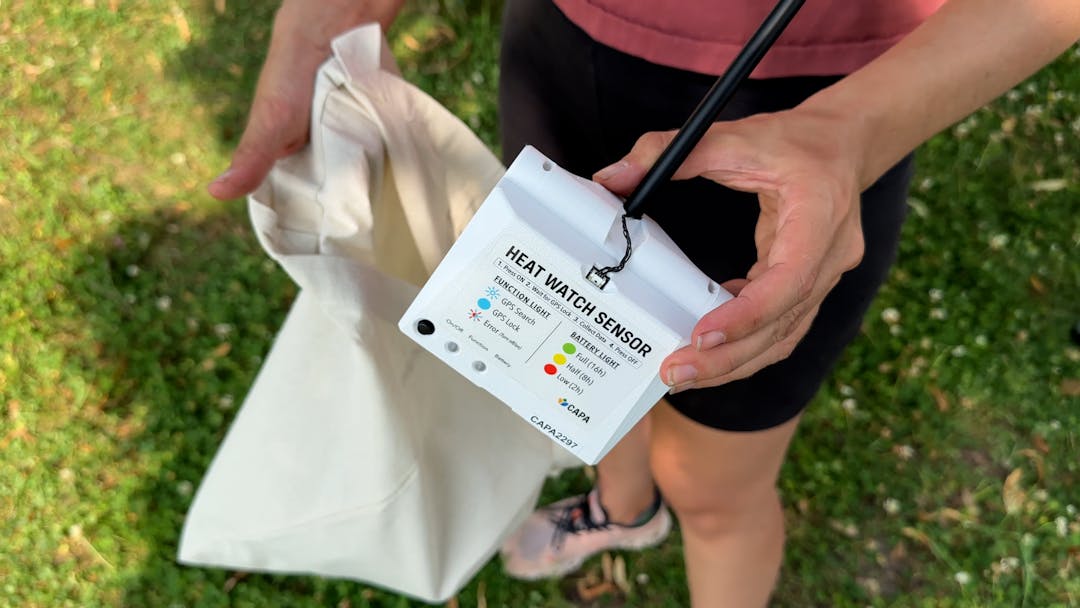
A heat tracking sensor.

Hennepin County is developing a Heat Resiliency Plan that will guide the county’s response to extreme heat and help keep residents safe and healthy. This work is funded by the Minnesota Pollution Control Agency SWC Planning Grant.

This plan will outline risks and identify solutions within our community and environment.

As we create this plan, Hennepin County is looking for your input, your stories, and your ideas to manage to extreme heat.

Share your thoughts, react to updates, and see your input reflected in planning.

Hennepin County is developing a Heat Resiliency Plan that will guide the county’s response to extreme heat and help keep residents safe and healthy. This work is funded by the Minnesota Pollution Control Agency SWC Planning Grant.

This plan will outline risks and identify solutions within our community and environment.

As we create this plan, Hennepin County is looking for your input, your stories, and your ideas to manage to extreme heat.

Share your thoughts, react to updates, and see your input reflected in planning.

  • Exploring new strategies around extreme heat

    supporting image

    Hennepin County is taking numerous actions to make the county more resilient to climate change and we need your help.

    Extreme heat is becoming more frequent and more dangerous. It affects health, work, housing, and daily life—especially for older adults, young children, outdoor workers, renters without air conditioning, and people with chronic conditions.

    Hennepin County is addressing this challenge by building a Heat Resiliency Plan based on expert insight and the lived experience of residents. This plan will be unveiled to the public in June 2026. The plan includes mapping where heat is highest, expanding places to cool down, improving

    Hennepin County is taking numerous actions to make the county more resilient to climate change and we need your help.

    Extreme heat is becoming more frequent and more dangerous. It affects health, work, housing, and daily life—especially for older adults, young children, outdoor workers, renters without air conditioning, and people with chronic conditions.

    Hennepin County is addressing this challenge by building a Heat Resiliency Plan based on expert insight and the lived experience of residents. This plan will be unveiled to the public in June 2026. The plan includes mapping where heat is highest, expanding places to cool down, improving alerts and public information, and coordinating with libraries, clinics, schools, and community organizations. It is also aims to strengthen worker safety, making it easier to access weatherization and cooling help at home, and investing in shade, trees, and cooling features in public spaces.

    You can help make Hennepin County develop this plan! Let us know which strategies are most important to you and what you would like to see from this investment from the county.

    A wide range of extreme heat strategies

    Hennepin County has identified potential strategies that can make the county more resilient to extreme heat. These strategies span all aspects of daily life and combined can keep people healthy, informed, and thriving.

    Cooling access and operations

    The county maintains a cooling options map to help residents find airconditioned spaces during hot weather. Potential strategies build on this capacity through various means.

    Strategies include:

    • Expand the network of cooling centers and resilience hubs in the neighborhoods with the greatest need.
    • Use clear, standard terms so residents know what services each site offers.
    • Provide multilingual information and reduce barriers for residents without documentation by using trusted, easy-access locations.
    • Add mobile cooling where gaps exist (for example, buses).
    • Offer evening and overnight hours during high-risk heat periods and coordinate no-cost transit to-hubs on hot days.

    Communication and alerts

    County messages will be timed to nationally recognized HeatRisk levels (Yellow, Orange, Red, Magenta) so residents get clear, early guidance.

    Strategies include:

    • Launch a plain language heat preparedness website with simple steps for each HeatRisk level.
    • Enroll residents in text and email alerts through County systems and disaster registries.
    • Use patient portals (for example, MyChart) and school/clinic channels to reach families before and during heat waves.
    • Partner with trusted community messengers for culturally informed outreach.

    Health systems and EMS (data driven response)

    Local data and recent hot summers help plan for surges in health needs and faster cooling care.

    Strategies include:

    • Create a Heat Action Plan (SOP) with clear triggers tied to HeatRisk.
    • Build a real time dashboard to monitor heat related ER visits and EMS calls and to trigger staffing and equipment.
    • Update medical coding and training so heat impacts are tracked accurately.
    • Secure 24/7 ice and rapid cooling supplies through local business partners.
    • Offer EMS transport to cooling hubs for residents who don’t need the ER.

    Housing, energy, and affordability

    Heat maps show where cooling and shade investments can lower temperatures. New programming will focus first on renters and low-income households especially [link].

    Strategies include:

    • Create a single entry point for weatherization, heat pumps, AC repair, and utility assistance.
    • Provide renter focused subsidies and landlord incentives to add cooling and ventilation.
    • Consider a “Right to Cool” policy and cool roof incentives or requirements.
    • Expand the contractor workforce for insulation, HVAC, and electrification.
    • Fund emergency AC repairs and create cool rooms in multifamily buildings.

    Worker safety and county operations

    Outdoor workers face higher risk during heat waves. Clear policies, gear, and scheduling protect health and keep services running. Hennepin County looks to further protect workers with a range of new strategies and policies.

    Strategies include:

    • Adopt hydration, shade, rest breaks, acclimatization, PPE, and heat safety training across high‑risk industries.
    • Pilot local ordinances and strengthen oversight to ensure compliance.
    • Allow earlier or later shifts during heat waves; coordinate with neighborhoods when hours change.
    • Provide County crews with breathable uniforms and consistent, department‑wide rules.

    Public health integration

    Extreme heat increases health issues. Hennepin County is exploring steps to expand integration with the health system including clinics, schools, and homevisit programs.

    Strategies include:

    • Add heat screening and education to clinic visits, home‑visits, WIC, Meals on Wheels, and school health.
    • Send timely patient messages through MyChart and include after-visit heat guidance.
    • Use culturally informed, multilingual materials for seniors, pregnant people, refugees, outdoor workers, and those with chronic conditions.
    • Track data to identify gaps, guide investments, and publish heat resilience scorecards over time.

    Public spaces, shade, and water

    Trees, shade structures, and water features cool streets, parks, and shared community spaces. Hennepin County looks to make further investments to mitigate extreme heat with infrastructure, especially in the most impacted areas in the Hennepin County heat map.

    Strategies include:

    • Add built shade (sails, canopies, pavilions) in parks, schoolyards, and busy walking areas.
    • Plant and maintain street trees and expand green infrastructure, focusing on hotter neighborhoods.
    • Designate cooling corridors with trees, greenspace, and shade along key routes.
    • Use cool or permeable pavement where feasible.
    • Improve water quality testing and increase fountains and splash pads at community sites.

    Let us know which strategies are most important to you and what you would like to see from this investment from the county.

  • Beat the heat: Community members share their ideas

    supporting image

    Hennepin County is partnering with three community-based organizations to lead engagement with, low-income, heat vulnerable, and diverse communities in a project called, “Heat Resiliency.

    The purpose of this four-month engagement, launched in July 2025, is to learn from resident’s lived experience with extreme heat and barriers they encounter when attempting to keep themselves safe and health.

    The three community-based organizations, Asian Media Access , Islamic Civic Society of America, and Oromo Diaspora Media , represent diverse unique cultural groups. These organizations have special connection with Pan Asian, East African,

    Hennepin County is partnering with three community-based organizations to lead engagement with, low-income, heat vulnerable, and diverse communities in a project called, “Heat Resiliency.

    The purpose of this four-month engagement, launched in July 2025, is to learn from resident’s lived experience with extreme heat and barriers they encounter when attempting to keep themselves safe and health.

    The three community-based organizations, Asian Media Access , Islamic Civic Society of America, and Oromo Diaspora Media , represent diverse unique cultural groups. These organizations have special connection with Pan Asian, East African, African American, and senior citizen communities and more.

    Ange Hwang at Asian Media Access said working with these vulnerable communities is essential.

    Extreme heat preparedness is critical for our Asian American seniors who face unique vulnerabilities - from language barriers that prevent them from receiving English-only emergency alerts to cultural hesitancy in seeking help during heat emergencies,” said Hwang. Such collaborative approach helps protect our most vulnerable community members while building trust between immigrant communities and local government - work that becomes more essential as climate change brings increasingly dangerous heat waves worldwide.”

    Ensuring these vulnerable voices are included within the Hennepin County planning process is critical as solutions are developed for implementing equitable solutions for the greater community. Each community group engages residents by collecting feedback through various means. This includes surveys at community events, focus groups, and informational presentations to raise awareness about the environmental, physical, and health implications of extreme heat.

    Participants are encouraged to share their concerns about Minnesota’s heat conditions and ideas on what local government can do to take action and support the community. Feedback gathered in these events from will inform the development of the Hennepin Heat Resiliency Plan with the goal of increasing resiliency of vulnerable populations during extreme heat events.

    You can share your own ideas too. Have your say via our ideas tab and share your thoughts on the Hennepin Heat Resiliency Plan.

  • Mapping the urban heat island

    supporting image

    The impacts of extreme heat are not experienced equally. Individuals who live in historically disinvested neighborhoods and those with additional health concerns are at greater risk during periods of extreme heat.

    To better understand the uneven distribution of heat and related impacts, more than 200 volunteer community scientists collected data in Hennepin and Ramsey counties in July 2024 as part of NOAA’s 2024 Urban Heat Island Mapping Campaign.

    Using heat sensors mounted on their cars, volunteers traversed designated routes in the morning, afternoon, and evening on one of the hottest days of the year. The sensors recorded data every second measuring temperature, humidity, time, and location.

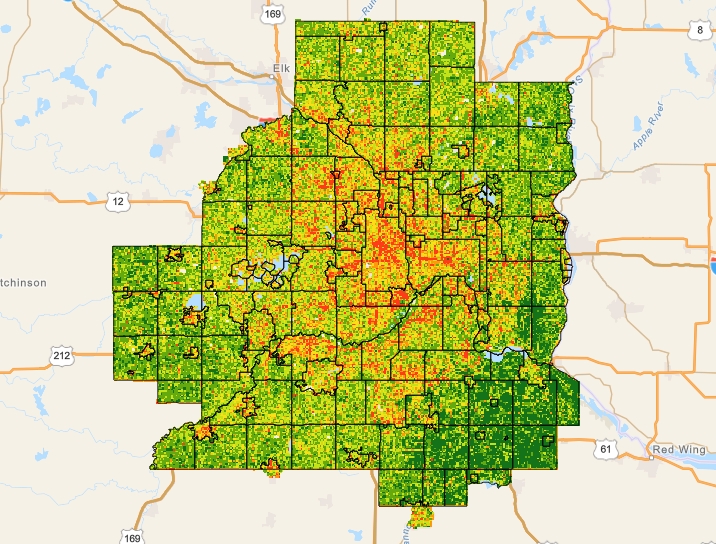
    The data collected by volunteers was analyzed by a team at CAPA to create detailed maps of the distribution of air temperature and humidity across much of Hennepin and Ramsey counties.

    The impacts of extreme heat are not experienced equally. Individuals who live in historically disinvested neighborhoods and those with additional health concerns are at greater risk during periods of extreme heat.

    To better understand the uneven distribution of heat and related impacts, more than 200 volunteer community scientists collected data in Hennepin and Ramsey counties in July 2024 as part of NOAA’s 2024 Urban Heat Island Mapping Campaign.

    Using heat sensors mounted on their cars, volunteers traversed designated routes in the morning, afternoon, and evening on one of the hottest days of the year. The sensors recorded data every second measuring temperature, humidity, time, and location.

    The data collected by volunteers was analyzed by a team at CAPA to create detailed maps of the distribution of air temperature and humidity across much of Hennepin and Ramsey counties.

Page last updated: 27 Apr 2026, 01:04 PM